Tuesday, 26 May 2015

100 Best Business Tips For Entrepreneurs to Help You Love and Grow Your Business

mark-zuckerberg1

If you’re an entrepreneur, it’s important that you love your business; after all you have the freedom and opportunity to make it what you want! This spring we challenged ourselves to focus on the small steps that we can all take to improve our overall satisfaction with our businesses. We each came up with 50 actions and decided to share 1 business tip for the 100 days before the launch of our book, The Big Enough Company.
The challenge is to focus on one new idea each day to help move you closer to your ideal. Join us by following our #100BizTips campaign.
TIP 1: Before you commit ask yourself, “Is this the business that we are in?”
TIP 2: Get clarity on how you spend your time. Write a job description.
TIP 3: Bartering is a very tricky business practice. If you MUST do it, create terms that are reciprocal and fair!
TIP 4: Remember why you started your business – Does your current business achieve this goal.
TIP 5: Being the boss isn’t worth it if you don’t exploit the freedom it affords you.
TIP 6: Stick a post it on your computer with your business goals and look at it daily.
TIP 7: Be more than a widget. Show your clients why your work matters to you.
TIP 8: Create accountability by finding a business buddy. Meet weekly.
TIP 9: Feedback is easiest to receive when you’re committed to the goal, not the details.
TIP 10: Celebrate your success. Even the small ones count.
TIP 11: Build iteration into the process so you won’t be surprised when your first attempt isn’t perfect.
TIP 12: Expand your network. Connect with one new contact a month.
TIP 13: Business IS business, but etiquette still matters. Make sure your actions demonstrate your values.
TIP 14: Leverage your expertise. Do people know how much you know? If not, start telling them.
TIP 15: Turn down or give away work you don’t love. Focus on what you want to be known for.
TIP 16: Give yourself the credit you deserve. Business ownership is amazing & challenging.
TIP 17: Don’t let old patterns dictate how things are done. Decisions allow for a fresh start.
TIP 18: Evaluate your daily routine. Are you happy with the work you have created? If not, take action.
TIP 19: Entrepreneurship is a marathon, not a sprint. How are you building your stamina?
TIP 20: Remember businesses and business owners come in all shapes and sizes. Find businesses you want to model.
TIP 21: Entrepreneurship is opportunity for you to have your life and your work on YOUR terms.
TIP 22: Help others. Business karma exists. Play by the rule of what goes around comes around.
TIP 23: Find relatable gurus who can help you strengthen your areas of weakness and make learning fun.
TIP 24: Be grateful. Thank colleagues and advisors that help and support you along the way.
TIP 25: Flexibility shouldn’t mean you’re “always available.” Do personal favors outside of work hours!
TIP 26: Ask for help. Find a group of advisors to turn to when you need help.
TIP 27: Give credit where credit is due. Get good ideas from others & don’t be ashamed to admit it!
TIP 28: Read one business article a week. It will expand your thinking as an entrepreneur.
TIP 29: Help others work with you by creating an instruction manual for yourself on how you work best.
TIP 30: Befriend a competitor. Explore collaborations and refer unwanted business.
TIP 31: Give your own business the same intention and attention that you do your clients.
TIP 32: Create your own definition of success. Ignore others definition and stick to your guns.
TIP 33: Give yourself credit for what you invest, risk, and sacrifice by calling yourself an entrepreneur.
TIP 34: Surround yourself with entrepreneurs that have you and your business’s best interest in mind.
TIP 35: I believe in the power of supplies! Get what you need to keep yourself productive, organized & energized.
TIP 36: When a flat out NO won’t work, try the “no, but” alternative.
TIP 37: If you allow yourself to be completely open to change, what alternatives would you consider?
TIP 38: Use technology to improve time-consuming tasks. There is often an easier way to do it
TIP 39: If you had no deadlines what would you choose to work on today? Make room for the work you love.
TIP 40: Minimize the time you spend on email. It is the easiest distraction.
TIP 41: It’s all about give and get. Think of 3 thank yous and help yous that you can give this week.
TIP 42: Break up with bad clients. No amount of money is worth a client that does not respect you or your work.
TIP 43: Keep 3 ‘re-centering’ tasks on hand for when you catch yourself procrastinating or being distracted.
TIP 44: Appreciate your customers. Let customers know they are valued.
TIP 45: Keep one unscheduled day a month as an open work day. Play, be creative, or go on a field trip.
TIP 46: Productivity vs. staying busy. Make sure you use your time wisely. It is your most valuable resource.
TIP 47: Knowing that others would grow your business differently frees you to focus on how YOU want to grow.
TIP 48: Identify several businesses you admire and investigate how you can model their success.
TIP 49: Make sure you have 3 go-to colleagues who aren’t afraid to give you honest, unvarnished feedback.
TIP 50: Learn to trust. If you find good support, they may do a better job in your areas of weakness.
TIP 51: Look for inspiration outside your industry. How can you translate others’ good ideas to your work.
TIP 52: Acknowledge fear and move on. It’s okay to be scared but it should not prevent you from growing.
TIP 53: Knowing what you do best is as important as knowing what you do poorly.
TIP 54: Travel! It’s a wonderful way to gain perspective and re-energize your creative thinking.
TIP 55: Making an occasional to-don’t list can help you stay on track as much as a to-do list.
TIP 56: If your biz isn’t meeting your needs, spend time and energy to make it work.
TIP 57: Most entrepreneurs’ secret weapon? Their network. You can’t have too many friends.
TIP 58: Involve your customers. Ask for feedback when you have a new product or service offering.
TIP 59: Networking is not just about sales – it’s about support, knowledge, and resources.
TIP 60: Look before you leap. Do research when you have a new idea or product offering.
TIP 61: Practice what you preach! Don’t deprive your business of the skills you give others.
TIP 62: Listen to your gut. YOU are your business’s most valuable asset.
TIP 63: Prevent business burnout by setting and honoring work/life boundaries. Off means off. On means on.
TIP 64: YOU run your business. Don’t let your business run you.
TIP 65: Protect your creative thinking time by building it into your schedule.
TIP 66: Listen to feedback – both good and bad. Take what is valuable and grow.
TIP 67: Saying no to one thing allows you to say yes to something else.
TIP 68: Learn to delegate. Focus your time on what you do best and enjoy the most.
TIP 69: Set up experiments to help answer your business questions. Nothing drives direction like real data.
TIP 70: Create a business mission. Evaluate business opportunities to see if they support this mission.
TIP 71: Success isn’t about size; it’s about satisfaction.
TIP 72: Say NO to opportunities that compromises your business needs and goal.
TIP 73: Your time is your greatest asset. Protect it and use it wisely.
TIP 74: Hang on to pieces of the business you enjoy. Make sure to delegate areas of weakness.
TIP 75: Three Things you *DON’T NEED* to start a business: an MBA, Formal Business Plan, or Partner.
TIP 76: Have interests outside of your biz. That will make you a more creative entrepreneur.
TIP 77: Turning down a halfway good opportunity makes room for an all good opportunity.
TIP 78: Join a community. Find your people and you will be able to learn, share and grow.
TIP 79: What business do you want yours to be like when it grows up?
TIP 80: Reward yourself and your staff. Make time to demonstrate your appreciation.
TIP 81: What entrepreneurs do you want to be more like? What can you learn from them?
TIP 82: Examine if you smile during the day. This is a good indication that your business is making you happy.
TIP 83: What job do you want in 5 years from now? Build your business accordingly.
TIP 84: Expand your impact. Find a cause to affiliate with that is in sync with your business.
TIP 85: When all is said and done how do you define success for your business? For yourself?
TIP 86: Lose your goal of perfection. Always work towards improving and remember the process is the most fun.
TIP 87: Whenever you can, think about how you can leverage work you’ve ALREADY done.
TIP 88: Get connected. Find partners that strengthen your offering.
TIP 89: You alienate most of your network if your business description is full of jargon. Make it easy to pass on.
TIP 90: Make a statement. Be clear about what you want your business to be known for.
TIP 91: Don’t say yes or no on the spot. It is always OK to say you need more time to consider.
TIP 92: Take baby steps. Remember that small steps lead to big outcomes.
TIP 93: Your business has at least 20 possible futures. Which provides you with what YOU want?
TIP 94: Keep an idea journal. Don’t let those great ideas escape. Review them annually and look for patterns.
TIP 95: Your business is what you make of it. Entrepreneurship is an opportunity for satisfaction, not a guarantee.
TIP 96: Say YES. Embrace experimentation and try new ideas.
TIP 97: Your business will never be perfect and it will never be done – but that’s the fun of it!
TIP 98: Examine areas of the business you avoid. Find a solution (person/application) to address those areas.
TIP 99: There’s no such thing as an overnight success. Learn from the history of your business heroes.
TIP 100: Pay it forward. Help the next generation of entrepreneurs.

Monday, 25 May 2015

New pharmacy rules 'should reduce dispensing mistakes'

    Medicine bottles in a pharmacy
    Seven patient deaths have been linked to mistakes made by high street chemists since 2009
    Health ministers want to introduce an airline-style error reporting system for the UK's high street pharmacies.
    The government hopes it will provide more accurate information about the number of mistakes being made.
    Voluntary reporting by pharmacists shows 10,000 medication errors a year, out of a billion prescriptions issued.
    But academic research suggests that a quarter of a million patients are given the wrong medicine every year, with a million more so-called "near misses".
    Seven patient deaths have been linked to high street chemists since 2009.
    There are 36,750 high street or community pharmacists in the UK. According to support groups, an increasing number of them are feeling stressed due to the pressure of ever-rising numbers of prescriptions.
    Under the Medicines' Act, pharmacists face criminal charges if they own up to making a mistake.
    But under the system proposed by ministers, if they made a genuine mistake that harmed someone they would not face prosecution.
    The Department of Health is currently considering a consultation about the proposed law change.
    It said: "Encouraging pharmacists and their teams to come forward when they do make mistakes means that patients get better, safer care.
    "Pharmacy professionals will learn from mistakes and prevent them from happening again.
    "By decriminalising mistakes we will promote a more open culture of transparency."
    Dawn Britton, a 62-year-old from Bristol, died in 2013 after going into a hypoglycaemic coma.
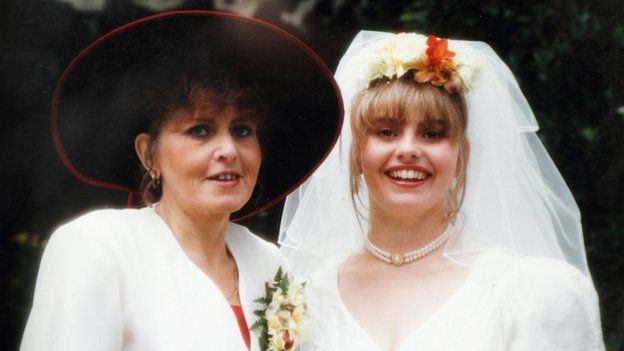
    Dawn Britton (l) and her daughter Tammy Haskins
    Tammy Haskins is angry that no one has been prosecuted for her mother Dawn Britton's death
    She passed away weeks after her pharmacist wrongly dispensed diabetes drugs, instead of tablets for her Crohn's Disease.
    Her daughter Tammy Haskins told the BBC 5 live Investigates programme there was no point changing the law as no one had faced prosecution in her mother's case.
    "The CPS looked at it twice, and both times they said it was not in the public's interest to prosecute," she told the programme.
    "I feel angry no one's accountable for my mother's death."
    The last NHS report into pharmacy dispensing errors, published in 2007 said that, in England and Wales, there were 113,953 "near misses" and 20,361 "dispensing errors."
    These figures represent 0.1% (near misses), and 0.02% (dispensing errors) of all prescriptions issued.
    But in the same year another study in the International Journal of Pharmacy Practice which looked at 11 UK community pharmacies put the error rate for prescriptions dispensed to be as high as 3%.

    'Duty of care'

    And voluntary reporting by pharmacists to the NHS under the current system shows only 10,000 medication mistakes a year, out of a billion prescriptions issued.
    The Department for Health now wants to encourage candour by introducing a "no-fault" reporting system where blunders could be reported more freely.
    But lawyers are sceptical that the changes would bring about significant improvements in safety.
    Renu Daly from Neil Hudgell Solicitors represented Dawn Britton's family.
    "These proposals will have a very limited impact on the protection of the public, or on ensuring the safe supply of medication is better regulated," she said.
    "They will simply protect pharmacists from any kind of external scrutiny and accountability, and that would be a dangerous route to take."
    According to the NHS National Reporting and Learning System, the vast majority of mistakes did not hurt anyone, but last year 1,200 people did suffer some harm because of a medication error.
    In 2014 there were three deaths linked to community pharmacies. One of them was 83-year-old Edlie Masters.
    Edlie Masters
    Edlie Masters' family argues that pharmacists should face prosecution for serious mistakes
    His son Leon said the government should leave the law alone.
    "If you don't have the threat of prosecution in place, it is giving pharmacists a right - 'if I do make a mistake, nothing is going to happen to me'," he explained.
    "Accidents do happen, but they have a duty of care as well to you as a customer handing over prescriptions to you."

    Learning lessons

    But Ash Soni, president of the Royal Pharmaceutical Society, insists the proposed law change will improve patient safety.
    "Pharmacists take the responsibility for the safe and correct supply of medicines to patients extremely seriously," he said.
    "Sadly, mistakes occasionally happen and, when they do, we must be open with patients and do everything we can to stop them happening again.
    "The proposed changes will increase accountability through greater reporting of errors and improve patient safety by sharing the learning from errors across the profession."
    Pharmacist Support chief executive Diane Leicester-Hallam said that more and more pharmacists are coming to her organisation for help.
    "Around three quarters of all calls to our stress helpline, Listening Friends, relate to work," she told the programme.
    "Enquiries include pressures to meet targets, staffing levels and increasing numbers of prescriptions."

Sunday, 24 May 2015

Sounding the alarm on the growing dementia crisis

By Jane Adey, CBC News
Isabelle Kelly, 78,  suffers from dementia. Her daughter Catherine says there aren't enough community resources for loved ones providing care at home.
Isabelle Kelly, 78, suffers from dementia. Her daughter Catherine says there aren't enough community resources for loved ones providing care at home. (Jane Adey/CBC)
Catherine Kelly says the easy part of caring for her elderly mother is remembering to give her her medication. It's her mom's confusion and her loss of memory that she finds both heartbreaking and frightening. 
"Having dementia is terrifying," says Catherine Kelly. Her mother, Isabelle, had a stroke eight years ago and developed vascular dementia.  
On The Go: Jane Adey asks if we're ready for the dementia tsunami10:30
"It's not easy to not remember what a toothbrush is, just imagine what that means to look at an object that you know is supposed to mean something to you and simply not know what it is," explained Kelly.
Dementia is a broad syndrome that impairs memory and other aspects of cognition like language, drawing and concentration. It's often severe enough to interfere with function. The number one cause of dementia is Alzheimer's disease. 
On The Go: Jane Adey asks, 'Where are Newfoundland and Labrador's geriatricians?"8:40
Alzheimer's International and The Canadian Alzheimer's Society have identified a coming dementia crisis as one of the major public health issues facing the world in the next 10 to 30 years. 
Dr. Aaron McKim
Dr. Aaron McKim is the clinical chief of long-term care with Eastern Health. (Jane Adey/CBC)
Shirley Lucas, the executive director at Alzheimer Society of Newfoundland and Labrador, confirms it's a looming problem on the healthcare horizon here.
"There are currently over 8,600 people affected by the disease in the province. We are looking at double the numbers in 15 years," she said.
On The Go: Jane Adey talks about the lack of community supports for home-first care for dementia patients14:45
Catherine Kelly knows there will soon be a lot more families like hers caring for loved ones. She wants to sound an alarm about the state of dementia care in Newfoundland and Labrador, a province with the fastest aging population in Canada. 
Kelly says her mother has received dementia care at memory clinics in both Ontario and Nova Scotia over the past eight years. She describes those facilities as a specialized one-stop shop for people with cognitive impairments. "There are geriatricians, geriatric psychologists and all kinds of community-based resources," said Kelly. 
Kelly said comparatively, this province is decades behind. 
Dr. Roger Butler
Dr. Roger Butler is a family physician in St. John's. He has had extra training in geriatrics. Butler is calling for a new approach to care for dementia patients. (Jane Adey/CBC)
"I feel very strongly that based on our experience in the last two years that families in Newfoundland and Labrador and people who have been diagnosed with dementia need a quality of care that we don't have here right now."

No geriatricians

According to Nova Scotia geriatrician, Dr. Ken Rockwood, there are 13-14 practicing geriatricians in that province. In Newfoundland and Labrador, there are none. 
 "To my knowledge, we don't have any full-on trained geriatricians in the province. We do have family doctors who have an extra year of training in geriatrics and complex care," said Dr. Aaron McKim, clinical chief of long-term care for Eastern Health — the province's largest health authority.
"Certainly we have tried to recruit geriatricians here, but it's hard to get the ball rolling. And if you're going to come here from another province and be the only geriatrician in the whole province that could very quickly become overwhelming," said McKim.
There are plans at MUN's medical school to implement its own geriatric training program to improve care for the elderly. There will be two six-month geriatric-training positions available to students in the fall. 
'I'm past anger. I'm at disappointment now.'
- Dr. Roger Butler
According to Rockwood, that's a good start. He says having specialists in geriatrics is a critical piece in future healthcare.
"They can be persistent local advocates and catalysts for better care systems. They can translate the literature and provide good models of care for government," said Rockwood. 
Dr. Roger Butler says he has been trying to be a advocate for the elderly for the past 20 years in Newfoundland and Labrador. Butler is a family doctor in St. John's with extra training in geriatrics.
"I'm past anger. I'm at disappointment now," said Butler. 

Home-first approach

Butler insists there is too much emphasis on institutionalization. He's advocating a "home first" approach that would allow dementia patients to stay at home longer. Butler said patients do better in familiar environments. 
"In Halifax, they have home first programs ... they've seen their acute care hospital numbers drop by 80 percent," said Butler. 
The problem, according to Dr. Butler, is there isn't enough money being put into community supports for seniors. He said there should be less spending on institutions and more spending on allied health professionals. He says physiotherapists can help dementia patients with mobility issues in their homes and occupational therapists can reconfigure seniors homes to make them safer. 
"In 1983 in Denmark, they said let's stop building nursing homes. They forced the community to respond ... with a much-enhanced home support system. They haven't bankrupted their nursing homes yet, and they're doing it for less dollars than we are doing it in Canada by about [a] 60-per cent cost," said Butler. 
'There are currently over 8,600 people affected by the disease in the province. We are looking at double the numbers in 15 years.'- Shirley Lucas, Alzheimer Society of Newfoundland and Labrador
"I can keep them out of that emergency department or out of the nursing home, that's $50,000 the provincial government saves a year."
Butler said there are already many families in this province caring for dementia patients who are in crisis. 
"We need a 30-year health-care plan and we need to hold our political masters to the fire on this one. The health care of our population is too important. This one disease will bankrupt us with the current way of thinking, we have to change," said Butler. 
"I think the time has come to ask ourselves, is this really ageism? You know, our seniors in this province deserve better."
Eastern Health declined CBC's request for an interview on the issue of a "home first" healthcare strategy for dementia patients.
CBC was told there's nothing concrete and the authority would be getting ahead of itself by speaking on the issue. 

Aging Catholic Nuns Get Care at Jewish Nursing Home

NEW YORK — May 24, 2015, 12:18 PM ET

Saturday, 23 May 2015

Wearable technology may improve sleep, endurance and chronic pain

660_active_edge_2.jpg
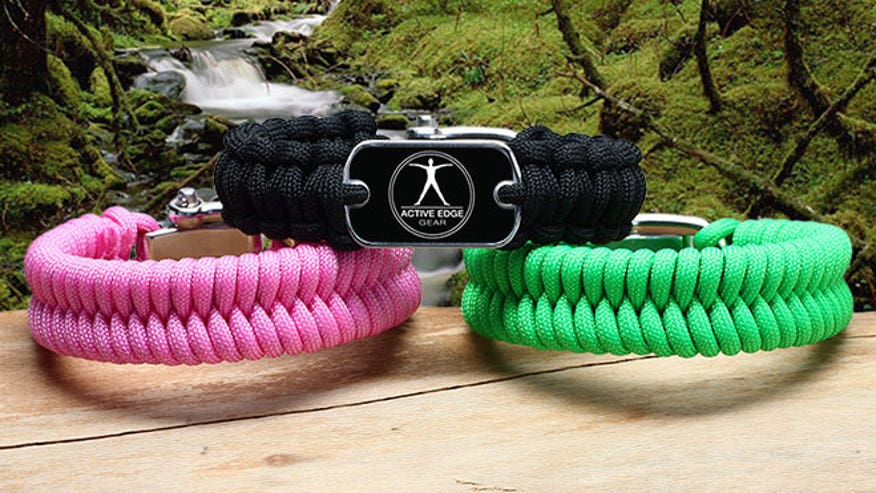
The Active Edge™ Performance Bracelet (pictured here in three colors) is infused with electromagnetic fields, and can improve endurance, flexibility and even sleep, say men and women who have tried the technology. (Photo courtesy Active Edge)
Sixty-three-year-old David Baker made a living driving tractor trailers in the South for 40 years. But when he was diagnosed with Parkinson’s disease in 2006, the condition meant the days he could still operate the equipment, much less walk without stumbling, were numbered.
Baker went on disability two years after his diagnosis, at which point he began to rely on a walker. Today, however, Baker can stand strong, most often without assistance— a capability due in large part, he said, to a bracelet infused with pulsed electromagnetic field therapy (PEMFT) that he has worn since 2013.
Baker is one of about 30,000 people worldwide who is using the device, which was created by Ponte Vedra Beach, Fla.-based company Active Edge. PEMF works by pulsing electromagnetic waves through the body to increase blood flow and reduce inflammation. PEMFT has been approved for use by the Food and Drug Administration (FDA) for decades, but Active Edge said its products are the first to offer these health benefits via wearable technology.
Gainesville, Fla.-based InBalance Technologies created the specialized PEMF technology that can be infused into fabric, and began collaborating with Active Edge CEO and founder Kurt Walchle after being introduced by a mutual contact through the Navy Seal Foundation.
Walchle and his wife, Melissa, had made a name for themselves in the U.S. military community for their success with Survival Straps, the couple’s previous venture which has resulted in the sale of over 1 million paracord bracelets— multipurpose bands that can be used to create shelter, traps for food, fire and more if the wearer is stranded in the outdoors— in the past six years. The Walchles began that company about eight years ago.
When Walchle heard about the potential business opportunity with InBalance, he was skeptical. But when he tested the technology himself and began sleeping better, having reduced pain in his elbow and more endurance while running, he was sold, and decided to embed the technology in the same material used to make Survival Straps.
 
“Our Survival Straps products have been credited with saving lives,” Walchle told FoxNews.com. “Then this technology comes along, and I’m like, ‘Oh my God, is this for real? What an incredible way that we can not just help people when there’s an emergency and they really need it, but we can improve people’s quality of life.’ I thought, ‘What a gift.’”
Putting Active Edge to the test
Active Edge offers PEMFT through its necklace and performance bracelet, each which are sold on its website for about $60, as well as through its fusion belt, which goes for about $65. For now, its products are marketed as performance enhancers, but the company is working with the U.S. Department of Defense (DoD) to conduct separate clinical trials that can provide scientific evidence that the devices also reduce inflammation and offer a direct medical benefit. By testing its products through the DoD, Active Edge is aiming to avoid the time and money often involved in earning FDA approval— a process that could cost millions of dollars and upwards of 10 years, Walchle said.
Over the past four years, Active Edge has run about 25 independent clinical trials involving nearly 2,500 men and women between ages 18 and 82. Tests suggest the product results in a 17 percent average increase in range of motion, a 12 percent average increase in grip strength, an 8 percent average reduction in fatigue with an increase in REM restorative sleep time, and a 23 percent increase in oxygen intake.
Two separate, small clinical trials have been conducted at the University of Florida Shands Hospital in an effort to show the technology has an effect on blood flow and inflammation with thermal imaging evidence.
Robert Erickson, medical director of Gainesville Thermogarphy, in Gainesville, Fla., who supervised the studies at the University of Florida, said both trials revealed the technology changed temperature differentials and resulted in thermal imaging differences in study participants who wore them.
“In some way, this electromagnetic energy is interacting indirectly or directly with the sympathetic nervous system, which is part of the involuntary nervous system,” Erickson told FoxNews.com.
The involuntary nervous system ends at the dermatome, located on the skin’s surface, which can be analyzed with thermography to study inflammation in different parts of the body including the spine, the liver and the kidneys, Erickson said. Thermography looks at temperature changes due to sympathetic nervous system changes.
“Unlike an X-ray that penetrates through the organ, [with thermography], you can get a view of what’s going on inside the body,” Erickson said.
During the first trial, a double-blind study, Erickson and a thermographer had four people wear headbands. Two headbands were treated and two were not.
The thermographer took the participants’ thermal images at baseline three minutes prior to putting on the headbands and again three minutes after wearing them.
After a separate medical company interpreted the findings, results suggested thermal changes and decreases in temperature differentials among people wearing both the untreated and treated headband, but that those changes were most statistically significant among those people wearing the treated version.
In a follow-up study involving an additional seven patients, Erickson analzyed how the technology affected thermal imaging on certain parts of the body when pulsed through other material: T-shirts, socks and wristbands.
He and the thermographer used digital infrared thermal imaging (DITI) scans of people not wearing the treated technology as a baseline to compare imaging before and after wearing the devices.
Participants wore the treated devices anywhere from 20 minutes to overnight, and again— this time through their own analysis— Erickson noted statistically significant differences in thermal imaging and temperature with the various materials.
“We’re ultimately composed of atoms,” Erickson said. “The electromagnetic environment can have a physiological effect on the body.”
None of the participants in either study reported any adverse side effects from the devices, nor did they feel the electromagnetic currents being generated through the material.
The research involving Active Edge’s embedded technology has not been peer-reviewed or published in a scientific journal.
The future of Active Edge
The DoD is currently testing Active Edge technology and the preliminary results are “outstanding,” Walchle said, but, due to a confidentiality agreement, he could not reveal more information.
“We’ve figured out how to shoot radio frequencies at a product that will attach to the cell wall and stay within the product— and that’s a big deal,” Walchle said.
Walchle added that while the FDA has approved the use of PEMF devices that can be used only about 200 times, some Active Edge products have six-year-old technology that still work.
As the DoD continues to test the technology, Active Edge is aiming to have at least a half of a million products on the market within the next year, Walchle said.
For now, the company is preparing to release its next product, the Active Edge Sleep Shirt, online Wednesday. The shirts will be sold for $49.
Walchle, who said he’s struggled with restlessness since he can remember, falls asleep quicker and stays asleep more soundly with Active Edge technology.
“I’ll sleep seven to eight hours now, and it is the craziest thing to me,” said Walchle, who added that the company’s independently run clinical trials suggest 80 percent of the people who wear the devices notice improved sleep.
Paul Tesori, of Ponte Vedra, Fla., has spent his entire life playing golf and the past 15 years caddying. Tesori told FoxNews.com that his Active Edge bracelet has reduced joint pain and helped increase the fluidity of his golf swing.
“I made a ‘1’ the other day and said if I break seven today, I’ll become a part owner,” Tesori, 43, joked.
Philip Gordon, 54, of Gainesville, Fla., works at a local country club and enjoys playing basketball in his spare time. He’s been wearing the Active Edge bracelet for about a year.
“When I don’t have it on, it seems like I get tired quicker,” he said. “When I put it on, it seems like I can play longer … and from my energy level, it seems like I get a second wind.”
As for Baker, the former tractor trailer driver, the technology has reduced his tremors so much that he seldom uses his walker anymore. He has also been able to change the oil in his pickup truck and even rebuild the deck in his backyard.
“I’m doing more,” Baker told FoxNews.com. “I’m more energetic now, and I know that I won’t stumble and fall. I’ve got more confidence now.”