Tuesday, 12 May 2015

Nutritious, delicious and easily digestible: Japan innovates to feed elderly population

Companies and care homes in Japan are finding new ways to feed the country's elderly population well. 

TOKYO: The Japanese government estimates that by 2060, 1 in 4 of its citizens will be over 75. So it is no surprise to learn that food tailored specifically for the elderly is a fast growing market in Japan.
At the Minami Oi Care Centre, three types of meals are served up for its elderly residents: Regular meals; dishes that retain their original form but are softened; and meals with a jelly-like texture.
Meals are thus prepared with care to ensure they are at the right texture to make it more digestible to some of the residents. When salted mackerel is served, some portions need to be mashed up and reshaped.
The process begins by adding the fish into a mixer with some broth. The mixture is then moulded into shape, put into the refrigerator to set, then seared just before serving, to make the mashed-up fish look like it has been grilled. This meal is for those who have difficulty swallowing food. A problem many elderly experience.
“Meals that have been blended in a mixer is common in Japan; but you don’t know what you’re eating,” said Sachiko Inoue, chief nutritionist at Minami Oi Care Centre. “And many don’t finish their meals, because they do not look delicious. I wanted customers to know what they are being served and that the meals looked and tasted delicious.”
Residents at the care centre enjoyed the variety of meals on offer. “I don’t have any teeth,” said a 92-year-old woman. “Everything is soft and delicious.” For the kitchen staff, fixing a meal that looks mouth-watering, yet one that is nutritious and satisfying, is no easy task.
“This is an elderly home - so keeping to the standard for the texture and the size is what makes the task difficult,” said chef Kunio Yamada.
The silver segment of Japan’s food industry is increasing by double digits. In 2011, it was estimated to be worth US$835 million. Today, its potential value, on the back of a fast-ageing society in Japan, is believed to be about US$23 billion.
A manufacturer, which already supplies the Minami Oi Centre, is capitalising on this potential. “We plan to build a new factory next year and focus on food products for those with dysphagia (difficulty in swallowing) - which indicates how much we expect this industry to expand,” said Shouku Yokoyama of Nutri NOTE. “I think we will spend about 1.5 billion yen (US$12.5 million).
Many other food manufacturers are taking this same path. One product being put out by several manufacturers is a type of powder that can be mixed into liquid to form a jelly-like substance. This prevents the liquid from going down the wrong way.
The trend for customised food products for the elderly is set to grow, especially now, with Japan's government calling for them to be looked after at home, rather than in facilities.
Source: http://www.channelnewsasia.com/news/asiapacific/nutritious-delicious-and/1840940.html

Old Age Doesn’t Have to Be a Shipwreck

David Wolpe is the Max Webb Senior Rabbi of Sinai Temple in Los Angeles.
200447695-001


A few years ago, after my father died, my brothers and I gathered in Philadelphia for her birthday. We took my mother out to dinner at a local restaurant. After the meal, my brothers and I pulled out our wallets. My mother looked at us with scorn, and loudly said, “No!” We were shocked. Surely she didn’t think that we would let her pay for us? But she seemed emphatic, so dutifully, we put our cards away. My mother looked at us again, and crowed triumphantly, “Dessert!”
We laughed, of course. But the contrast of her force and her limitations is painful. The diminishment of a person is a fearsome and often tragic thing to see. I am at an age when my contemporaries are taking care of and often burying their parents. It is not unusual for death to be preceded by a steady and sometimes painful decline. As a rabbi, I visit old-age homes and hospitals and have to remind myself that this is the fate of everyone who lives long enough. Once the people who are slow, burdened with brittle bones and fading faculties, were children, teenagers, adults, bursting with dreams. They, too, could not imagine being in their current state.
The nuclear family is not kind to the aged. Once most people lived with multiple generations all together in the same house. Institutions have taken the place of families, and the old-age home and the college dorm epitomize our social structure—the old live with the old, and the young live with the young. Except for worship services and sporting events, it’s rare to see intermingling of generations in our society. We pay homage to the wisdom of age, but our culture does not seem to believe it. In a time when technology continually changes the landscape, it’s the younger generation who are likeliest to know how to navigate the world. Teenagers will fix your cellphone and connect your AppleTV. Startups are often created by those who are starting out.
Still, it is our great loss that we disregard the generations who preceded us. Although the elderly represent the past, they are in fact our future. They are where we are headed. Not only do they carry the vividness of personal memory about the years before we were born, but they also carry the immediacy of what it means to be further along on the journey than most of us are now. One day, if we are lucky, we will be old. What will life feel like for me in 20 or 30 or 50 years?
Old age, Charles de Gaulle once said, is a shipwreck. The first sense of that remark is the wreckage of one’s body, once so reliable and now so painful in rest and burdensome in motion. Yet if you think of the storm and gales, emotional, physical, even historical, that so many of the elderly have had to endure, the image of a shipwreck makes a new kind of sense as well. Just as we rush to interview the survivors of any difficult experience, for we know there is an insight born of survival itself, we should look to those who are older not only for the wisdom of living, but also for the wisdom of aging.
Everyone is ultimately headed to the same place. Care for the aged is a mandate of compassion to be sure, but it is also a way of understanding the human condition, including our own. The Psalmist pleaded thousands of years ago, “Do not cast me aside when I am old” (71:9). All of us need to reflect on how well we heed the Psalmist’s cry.

Monday, 4 May 2015

7 Habits of People Who Age Well

Exercise, diet—even attitude—can be as important as genetics when it comes to growing old gracefully. "Old age," as Bette Davis once said, "is no place for sissies." But that doesn’t mean you need to chicken out. Sure, growing older affects nearly every part of your body—including your hair, skin, heart, muscles, and more—but aging well may be as simple as adopting these (mostly) easy everyday habits.
By Abigail Wise
1 Maintain a positive attitude.
positive-attitude
Photo by Sean Malyon/Getty Images
You are what you think you are when it comes to aging. Seniors who think of age as a means to wisdom and overall satisfaction are more than 40 percent more likely to recover from a disability than those who see aging as synonymous with helplessness or uselessness, according to The Journal of the American Medical Association.
2 Watch what you eat...
watch-eat
Photo by Carlos Daniel Gawronski/Getty Images
Nutrition plays a major role in how your body ages. “The latest research shows that a low-glycemic diet high in fresh fruits and vegetables, whole grains, and lean protein is healthiest,” says Dr. Jeffrey Benabio, Physician Director of Healthcare Transformation at Kaiser Permanente Primary Care. One great example is the Mediterranean diet, rich in plant-based foods, whole grains, nuts, and red wine (in moderation!). It also involves eating fish twice each week and cutting back on salt. Research shows that this type of diet may help you age better by warding off heart attacks, strokes, and premature death, according to Harvard Medical School. An added bonus: Benabio says that foods rich in Omega-3 fatty acids, such as walnuts, salmon, and flaxseed, help your skin manufacture the essential oils it needs to protect itself and can help skin look younger. In contrast, sugary, carbohydrate-heavy, and fatty foods—think, chips, soda, and white bread—can speed up the aging process, says Benabio. “So, when shopping or dining out, opt for whole grains and natural sweeteners,” he says.
3 …And how much you eat.
watch-how-much
Photo by Cultura/BRETT STEVENS/Getty Images
Overeating may lead to a shorter life span, cardiovascular disease, and type 2 diabetes, according to the NIH. To age well and live longer, it’s best to stick to a balanced diet that consists of about 2.5 cups of vegetables, 1.5 to two cups of fruit, six ounces of grains, three cups of dairy, and five ounces of protein each day.
4 Exercise regularly.
exercise-regularly
Photo by Paul Bradbury/Getty Images
Staying active is a vital part of aging well. The average woman can lose 23 percent of her muscle mass between ages of 30 and 70, says Fabio Comana, a faculty instructor at the National Academy of Sports Medicine. You lose muscle more rapidly as you age, but exercise—resistance workouts in particular—can increase mass and strength, even well into your 90s, says Comana. Staying fit may also reduce age-related memory loss, according to a study published in the journal Frontiers in Aging Neuroscience. Plus, Alzheimer’s disease accounts for approximately 60 to 70 percent of all dementia cases, says Comana, adding that increasing physical activity can decrease this statistic by 25 percent. That’s because exercise strengthens the hippocampus, the region of the brain associated with learning.
5 Stay social.
497279839
Photo by Courtney Keating/Getty Images
Friends and relatives can help you live longer. Those of us with strong social ties were shown to have a 50 percent higher chance of living longer than those with poor or insufficient relationships, according to a study published in the journal PLoS Medicine.
6 Protect your skin from the sun.
protect-sun
Photo by Photo Alto/Frederic Cirou/Getty Images
Too much time in the sun can cause wrinkles, not to mention cancer. But wearing sunscreen can help prevent your skin’s aging. And while the sun’s UV rays do trigger vitamin D production, which is essential for bone health, that’s hardly a good reason to expose yourself. “Here are the facts,” Benabio says. “After a few minutes of sun, your skin stops making vitamin D…and starts making skin cancer.” Most people get plenty of Vitamin D, but if you think you’re not, try eating more salmon or even eggs (don’t skip the yolk).
7 Get plenty of sleep.
sleep-enough
Photo by Rafael Elias/Getty Images
You probably know that you should snooze for seven to nine hours each night, according to the National Sleep Foundation. But did you know that not sleeping enough may mean a higher risk of obesity, heart disease, and diabetes. Plus, naps can improve memory and even help make up for missing nightly Zzs. And it turns out that “beauty sleep” isn’t a myth. During sleep, your body releases a growth hormone that helps restore collagen and elastin, the essential building blocks of young, healthy skin, says Benabio. Recent studies have also shown a connection between insomnia and accelerated aging of the brain, Benabio says. In other words, chronic lack of sleep adversely affects your brain’s function and speeds up the aging process. “Too many of us treat sleep as a luxury instead of a need,” says Benabio. “If I could encourage people do make one healthy change this year, it would be to sleep more.”

For the Aging, Mobile Technology is the Most Freeing

old_man_cell_phone
File this one under The Fruits of Technology, especially for the aging.
Older people, 65 and older, are the most likely to reap the emotional benefits of smartphone technology. More than any other age bracket, they consider a smartphone to be "freeing," rather than "a leash," according to the Pew Research Center. On the other hand, 18- to 29-year-olds are the most likely to consider smartphones a leash.
The elderly also felt more strongly than any other age group that smartphones are "connecting" devices, as opposed to "distracting." Again, 18- to 20-year-olds were the most pessimistic: 37 percent considered their phones to be more of a distraction than a device that served to connect them to friends and family.
"For young adults, smartphones are often the device through which they filter both the successes and annoyances of daily life — which could help explain why these users are more likely to report feeling emotions about their phone ranging from happy and grateful to frustrated or angry during a weeklong survey."
Young people ignoring each other with smartphones.
Researchers suggest this is a result of how different ages use their phones differently. Younger generations are more likely to rely on their devices for social networking and viewing media content. Older generations use more basic functions like telephone calling, texting, and email. One reason younger generations may find their phones less satisfying is they serve as a way to actually avoid the people around them, rather than be open to naturally occurring conversation.
The takeaway here is to not presume seniors are "too old" or automatically "uninterested" in emerging technology just because there is a learning curve. As Bill Novelli, CEO of AARP (formerly the American Association of Retired Persons) explains, different generations share the same needs and values, meaning that everyone stands to benefit from technologies that brighten our lives.
Read more at the Pew Research Center.

Friday, 24 April 2015

Finally, A Benefit To Being Fat: Less Dementia In Old Age

Researchers have no idea why, but they are realizing that a few extra layers can be helpful for the elderly.
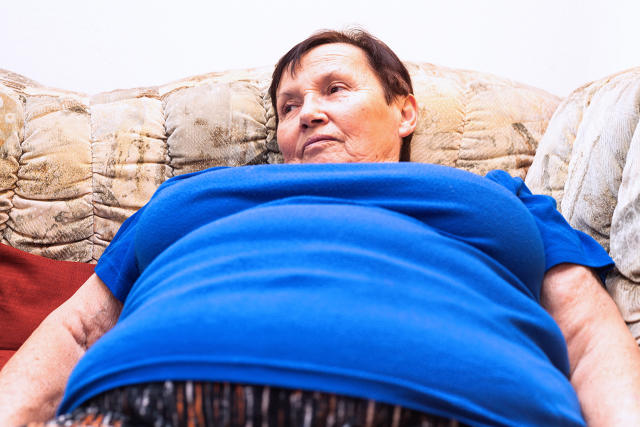
Finally, there may be a benefit to gaining weight: You may be at less risk of developing dementia in old age. Overweight people have a significant advantage when it comes to a disease that affects more and more elderly people around the world.
The research, from a large British study, analyzed medical records for almost two million people with an average age of 55. The most obese had a 29% lesser chance of dementia 15 years later, compared to people of normal weight. By contrast, the underweight were most at risk. They had a 39% greater chance of dementia—a brain condition that causes people to lose memory and suffer impaired thinking.
Interestingly, the results weren't affected significantly by the exact age of the people studied, nor by rates of smoking and alcohol use. Exactly why someone heavier should be less at risk isn't at all clear. Even if somehow fat on the body reduces risk, that doesn't explain fully why someone with less-than-optimal fat should be that much more at risk.
Jan Mika via Shutterstock
Of course, the study contradicts most of everything we're told about disease risk in middle-to-late age. "Our results suggest that doctors, public health scientists, and policy makers need to re-think how to best identify who is at high risk of dementia," says co-author Stuart Pocock, a professor at the London School of Hygiene & Tropical Medicine.
"We also need to pay attention to the causes and public health consequences of the link between underweight and increased dementia risk which our research has established."
Suffice to say, piling on the pounds is probably a bad idea until we know more. But at least being overweight may not be all bad. It's somewhat refreshing to hear that message for a change.
[Top Photo: Martin Barraud/Getty Images]

Can Health-Monitoring Technology Help You Live Longer?

From wearable devices that track physical activity to blood tests that check for biomarkers, consumers today have easy access to more information about their health than ever before, thanks to health-monitoring technology.
But can this technology help people to defy aging and live longer lives?
“Technology that supports healthy lifestyles can improve the quality of aging. But not yet proven that it expands your life,” said Ursula M. Staudinger, a lifespan psychologist and internationally acknowledged aging researcher who is director of the Robert N. Butler Columbia Aging Center in New York.
Renowned aging and longevity expert Dr. Walter M. Bortz II believes health-monitoring technology may help some individuals to live healthier and longer lives—but only if they use the data to adopt lifestyle habits that foster well-being.
CanHealth-MonitoringTechnologyHelpYouLiveLonger
“Wearing 10 monitors on your body isn’t going to do a thing unless you change your behavior,” said Bortz, a clinical professor of medicine at Stanford University School of Medicine who teaches a course on the science of longevity.
“Technology can help change behavior,” he said. “But it’s not a fail-safe.”
Health-monitoring technology represents a multi-billion dollar industry with products ranging from activity wristbands such as Fitbit to wearable blood glucose monitoring devices that send data to smartphones. Other advances include services such as Inside Tracker’s Inner Age, which checks a blood sample for five biomarkers to determine if your body matches your chronological age and recommends foods to improve your score.
Staudinger views the growing interest in health-monitoring technology as a good phenomenon that can motivate those seeking healthier lives. “Behavioral research has shown that feedback is very helpful in keeping people on track with their goals,” she said.
But many people won’t change their habits unless they have an incentive, including lower health insurance costs because they’re healthy, said Bortz.
“I’m in favor of rewarding good behavior,” said Bortz, an 85-year-old marathon runner who believes he should pay less for health insurance than a physically unfit 40-year-old.
Bortz is working to develop a composite fitness profile for potential use by the health insurance industry. “We need to show how the data translates to lower health care costs,” he said.
Lifespan Versus Life Expectancy
Many people use the terms “maximal lifespan” and “average life expectancy” interchangeably, although they describe to two different things, noted Staudinger. Maximal lifespan refers to the number of years a person can expect to live based on the biology of aging and mortality records. Life expectancy refers to the average number of years a person is expected to live. For example, children born in the United States in 2012 can expect to live an average of 79 years, according to the U.S. Centers for Disease Control and Prevention.
“I believe 100 healthy years is our biological potential. That’s my goal,” said Bortz, who is the author of The Roadmap to 100 and many other books and articles on healthy aging.
Chronological age and genetic composition typically play a small role in determining how long a person will live, according to longevity experts. People with the same chronological age may have very different cognitive and biological (which refers to the body’s physical condition) ages.
“A top performer in cognitive ability at age 70 can be above the average level of a 30-year-old. That is how drastic the differences are,” said Staudinger.
Focus on Living Better
Staudinger would like to “see the conversation shift to living better, not living longer. We have expanded our lives by three decades (to age 80) in the last 100 years. Now it’s time to help people to fully enjoy those longer lives. Most of us can’t do that yet.”
Health-monitoring technology can help reduce the “sick years that are built into these longer lives, which would be major in terms of costs to society and the quality of life of individuals and their families, who are most often involved in the caretaking,” she said.
“Health does not depend on genes. It depends on behavior,” added Bortz, who estimates that genes are only 15 percent responsible for how we live and how we age.
Looking ahead, longevity experts worry about data reliability and privacy concerns as more people adopt health-monitoring technology. For instance, the U.S. Food and Drug Administration doesn’t regulate many consumer devices, including fitness trackers. Who has access to the data collected by these devices raises questions about privacy. Another concern is the availability of quality software and apps that “make sense of the data for the lay person who is not a medical doctor or a behavioral scientist,” said Staudinger.
Despite the industry challenges, experts expect health-monitoring technology will play a larger role in people’s lives in the future. Bortz foresees the day when folks have a step counter embedded into their shoulder to continuously track their activity. To some, the scenario sounds like science fiction—but not to Bortz.
“It’s not so far off,” he said. “It’s coming.”
The Northwestern MutualVoice Team is a group of professionals who share insights and opinions from experts and industry leaders across the enterprise. Our vision is to inspire others to take action and plan for their financial future through topics ranging from financial planning, retirement planning and distribution strategies, wealth accumulation and preservation, to leadership, philanthropy and innovation.

Running Into Old Age

A growing number of seniors are completing marathons and triathlons, shedding new light on how exercise affects the elderly body.
George Sperzel, 63, estimates that he’s run over a hundred competitive races over the last few years.
Sperzel, a finance executive from Lake Forest, Illinois, dabbled with exercise in his younger years, but didn’t embrace competitive running until he was nearly 60. Despite his late start, though, he feels that his athletic ability has only gotten better with time: “I have found that focused training will deliver the same benefits for aging athletes as for anyone of any age,” he says.
In general, peaking in one’s 60s is somewhat of a rarity. In sports medicine, the years between 35 and 40 are often considered a turning point for serious athletes: Skill begins to erode more quickly with time as age brings changes in muscular strength and susceptibility to injury. Endurance tends to peak around age 35 and then slowly decrease until around age 60, at which point the decline becomes much steeper. And unsurprisingly, it holds true across generations that older adults as a group tend to be less active than their younger peers. Roughly one-third of Americans over the age of 65 are considered physically active, compared to around 80 percent of the general population.
"In the past, the majority of marathoners were young competitors.The demographics have shifted substantially."
But within the minority of active seniors, some, like Sperzel, have held on to or even increased their athleticism. In recent years, a growing number of senior citizens have begun competing in marathons and triathlons, causing experts to question much of the conventional wisdom about age-related changes in physical capacity. In U.S. marathons, runners over the age of 40—known as “masters” in the running world—now represent more than 50 percent of male finishers and 40 percent of female finishers, often outperforming younger athletes.
Greg McMillan, the owner and head coach of McMillan Running, an online company that coaches competitive runners, says he’s worked with many older athletes, a large number of whom only recently took up the sport. “We’ve never had so many people starting to get active later in life and stay active through their advancing years,” he says. “So we can no longer lump everyone in the same boat because of age.”
“In the past, the majority of finishers in marathon and triathlon races were young competitors,” agrees Hirofumi Tanaka, an aging researcher and a professor of exercise science at the University of Texas. “The demographics of participants have shifted substantially.”
These older runners may be reaping rewards beyond a medal at the finish line: Research has shown that exercise can help maintain physical fitness that may otherwise be lost over time. "A lot of the deterioration we see with aging can be attributed to a more sedentary lifestyle instead of aging itself,” a 2014 review article on aging and exercise, published in the Journal of the American Academy of Orthopedic Surgeons, concludes. “The prevalence of age-related chronic diseases and physical dysfunction is substantially reduced or even absent in older adults who continue to train and compete in athletic competitions."
“Aging merely lowers the ceiling of physical ability,” Tanaka says. "Older adults, even those over 90 years of age, respond well to exercise training and regain much of what they lost with aging.”
But the authors of the 2014 study emphasize that athletic feats like marathons aren’t the only way to enjoy the benefits of exercise in old age. According to their data, any regular vigorous exercise may reduce the decline in aerobic capacity—the ability of the heart and lungs to deliver oxygen to muscles, a main component in overall age-related physical decline—by as much as 50 percent.
According to a 2011 study published in the journal The Physician and Sports Medicine, muscle strength can also be preserved through exercise. While some loss of strength is inevitable, the researchers found that older athletes who participated in exercise programs showed significantly more muscle strength that people of similar age who didn’t exercise. Maintaining muscle strength can be a key component of successful aging, as past research has shown that its loss in seniors is correlated to an increased risk of falling, a significant cause of age-related trauma.
In fact, contrary to popular belief, older adults are not at an overall increased risk of injury when participating in exercise activity; rather, regular exercise puts them at diminished risk compared to their sedentary peers. The 2014 study noted that regular movement can strengthen bone density, which protects against osteoporosis, while a separate study, published in 1985 in the Journal of Applied Physiology, found that it can also help reduce the risk of arthritis and injuries to tendons and ligaments.
Even for the adults who haven’t exercised in years or even decades, research suggests that late is still better than never. A 2014 study in the British Journal of Sports Medicine found that among a group of people aged 55 to 73, those who had exercised at least once a week subsequently had lower rates of chronic disease, depression, and “physical or cognitive impairment” than their more sedentary peers. However, the subjects that began the study as sedentary but began exercising regularly sometime over its eight-year follow-up period had outcomes that were almost as good.
Even for the adults who haven’t exercised in years or even decades, research suggests that late is still better than never.
For optimal results across the board, researchers say, older adults should routinely strive to exceed the minimum weekly exercise recommendations for their age group: 150 minutes of week of moderate-intensity activity or 75 minutes of vigorous activity, and two sessions of muscle-strengthening exercise, according to the Department of Health and Human Services. But the advice comes with a caveat: Gains in fitness, function, and health are reliant on the maintenance of an exercise program. If a person stops exercising, the effects can be reversed in a relatively short amount of time.
It’s an unavoidable truth that physical function does diminish with age, and exercise cannot fully protect against the natural aging process. What it can do, however, is reduce the magnitude of this decline. By staying active and competitive, older athletes may help more sedentary seniors realize that an active lifestyle may lead to not only longer life, but a better life, too.
Sperzel, for one, has no intention of slowing down in the years ahead. “I am literally in the best shape of my life,” he says, “and physically I feel better than I ever have.”